


Ramon Peña Fish Preserves
Conservas Ramón Peña has been canning fish for over a century in Ribadumia, in the heart of the Salnés. In this section we bring together their entire range of canned fish: small sardines from the Galician Rías in eight different sizes, bonito del norte from the Cantabrian Sea, mackerel, small horse mackerel and rarities such as garfish or stewed xoubas that almost no cannery bothers to make any more.
What makes a Ramón Peña tin different
The difference lies in what you don't see. The fish is selected at the port and sorted by size before entering the factory, where it is headed, gutted, placed on racks and toasted following the traditional process. Each piece is placed in the tin by hand, one by one, before being covered with olive oil. This is work that cannot be automated, and it explains why, when you open the tin, the pieces appear aligned, whole and all the same size.
Understanding sizes
The number next to each product — 12/16, 20/25, 30/35 — indicates how many pieces fit in the tin. The more pieces, the smaller and finer each one is. Larger sizes have more body and work better on a plate; smaller ones are more tender, with barely noticeable bones, and are eaten in one bite as pintxos and appetisers. No size is better than another: there is a right size for every occasion.
Black Line and Silver Line
The Black Labels are the cannery's top-quality range, with the most select sizes and the most careful presentation. The Silver Line keeps the same production process in a format designed for everyday eating. You will see both side by side in this section, because it is just as valid to save a tin for a special occasion as to open one on any given Tuesday.
From the Atlantic and the Cantabrian Sea
The small sardines come from the Galician Rías, the Atlantic Ocean and the Mediterranean Sea, with a fishing season between May and October. The bonito del norte is caught in the Cantabrian Sea during the summer season. This origin is not just a label detail: the raw material determines the final result more than any other factor.
How to serve them
Always at room temperature, never cold from the fridge. The olive oil needs to warm up to release its aroma, and cold fish loses much of what makes it special. Serve with bread that doesn't compete, a few salt flakes if you like, and little else.
If you are looking for shellfish, also see the Ramón Peña canned shellfish section, with mussels, octopus, razor clams, clams and baby squid.


Sardinette all'olio d'oliva 12/16 pz. | Ramón Peña
Scegli un'opzione

Ventresca di tonno | Ramón Peña
Scegli un'opzione

Sardinette piccanti all'olio d'oliva 12/16 pz. | Ramón Peña
Scegli un'opzione


Sardinette con peperoni di Padrón | Ramón Peña
Scegli un'opzione
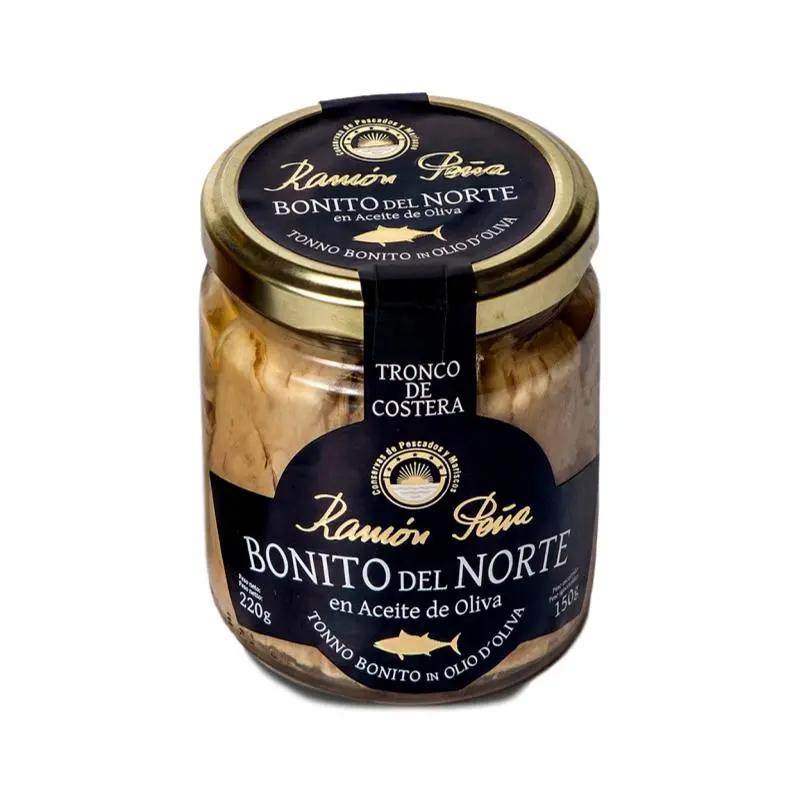

Tonno bianco all'olio d'oliva | Ramón Peña
Scegli un'opzione
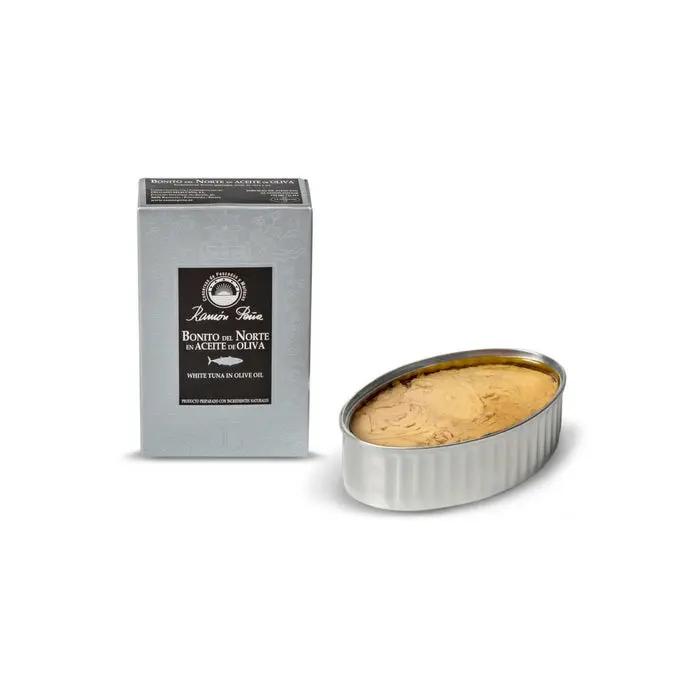
Tonno bianco all'olio d'oliva Línea Plata | Ramón Peña
Scegli un'opzione

Ventresca di tonno bianco | Ramón Peña
Scegli un'opzione

Sardinette all'olio d'oliva 16/20 pz. | Ramón Peña
Scegli un'opzione

Aguglie all'olio d'oliva | Conservas Ramón Peña
Scegli un'opzione

Tonno pinne gialle all'olio d'oliva 1 kg | Conservas Ramón Peña
Scegli un'opzione


Pezzi di aguglia all'olio d'oliva | Conservas Ramón Peña
Scegli un'opzione

Filetti di sgombro affumicato all'olio d'oliva | Conservas Ramón Peña
Scegli un'opzione
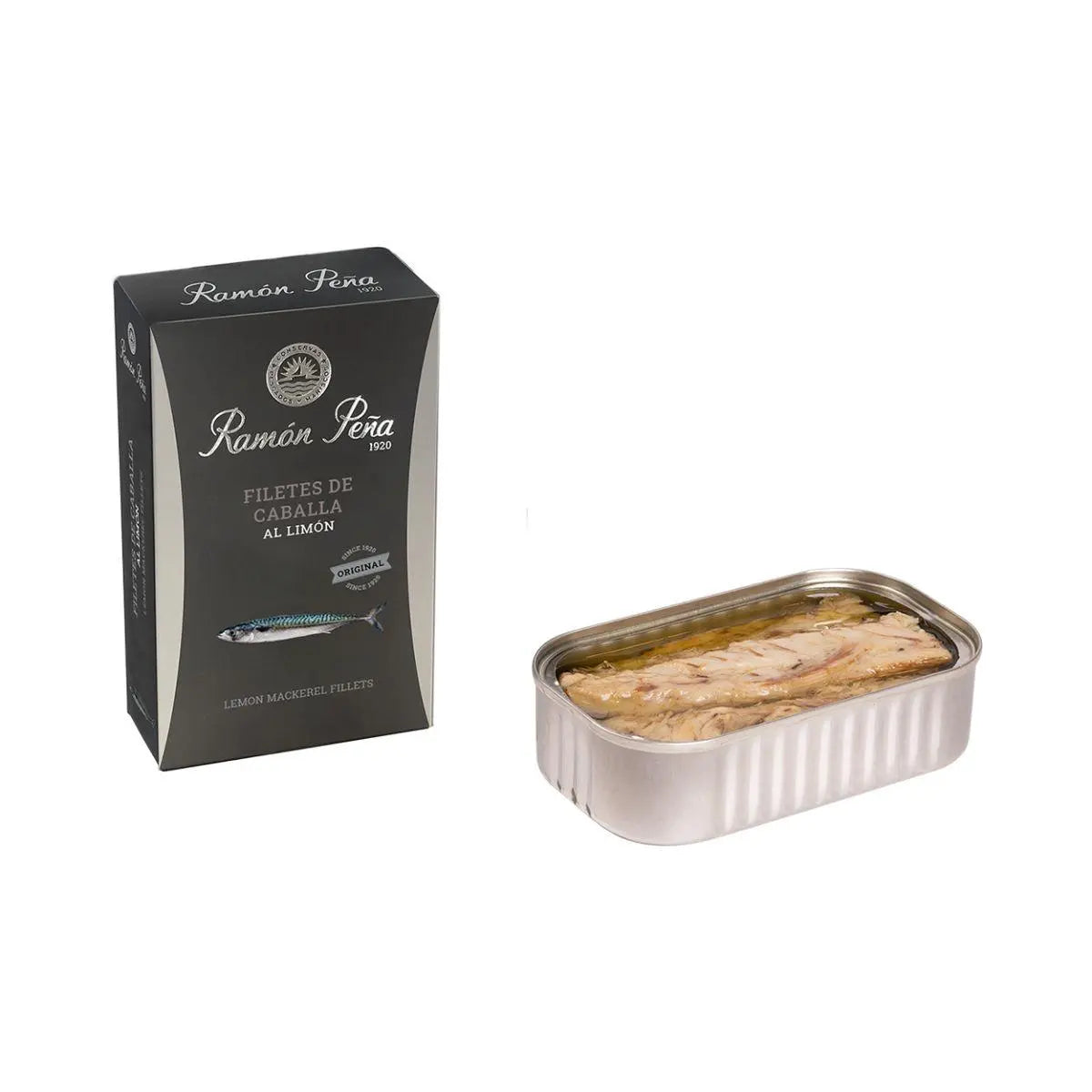
Filetti di sgombro al limone | Conservas Ramón Peña
Scegli un'opzione

Sardinette do Xeito all'olio d'oliva 20/25 pz | Conservas Ramón Peña
Scegli un'opzione


Sardinette in umido Xoubas | Ramón Peña
Scegli un'opzione
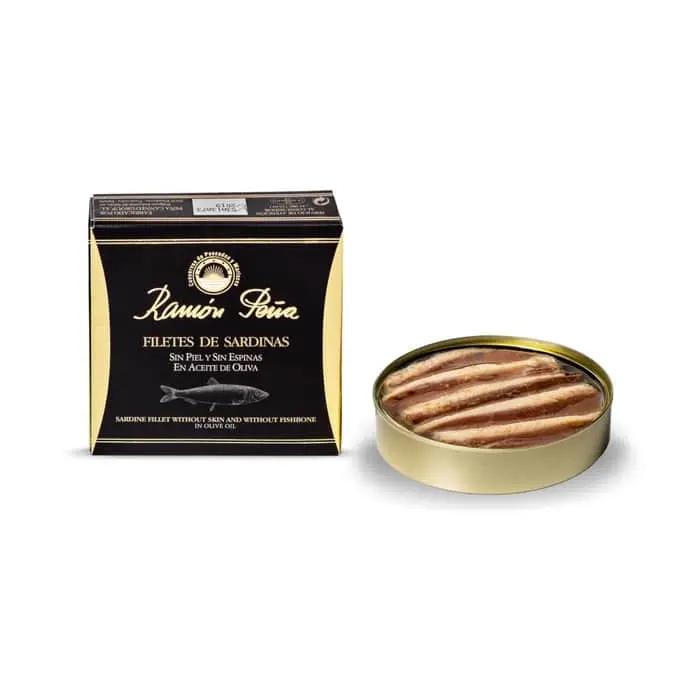

Filetti di sardina senza pelle e senza lische | Ramón Peña
Scegli un'opzione
Ramón Peña Canned Seafood
Conservas Ramón Peña has been canning fish for over a century in Ribadumia, in the heart of the Salnés. In this section we bring together their entire range of canned fish: small sardines from the Galician Rías in eight different sizes, bonito del norte from the Cantabrian Sea, mackerel, small horse mackerel and rarities such as garfish or stewed xoubas that almost no cannery bothers to make any more.
What makes a Ramón Peña tin different
The difference lies in what you don't see. The fish is selected at the port and sorted by size before entering the factory, where it is headed, gutted, placed on racks and toasted following the traditional process. Each piece is placed in the tin by hand, one by one, before being covered with olive oil. This is work that cannot be automated, and it explains why, when you open the tin, the pieces appear aligned, whole and all the same size.
Understanding sizes
The number next to each product — 12/16, 20/25, 30/35 — indicates how many pieces fit in the tin. The more pieces, the smaller and finer each one is. Larger sizes have more body and work better on a plate; smaller ones are more tender, with barely noticeable bones, and are eaten in one bite as pintxos and appetisers. No size is better than another: there is a right size for every occasion.
Black Line and Silver Line
The Black Labels are the cannery's top-quality range, with the most select sizes and the most careful presentation. The Silver Line keeps the same production process in a format designed for everyday eating. You will see both side by side in this section, because it is just as valid to save a tin for a special occasion as to open one on any given Tuesday.
From the Atlantic and the Cantabrian Sea
The small sardines come from the Galician Rías, the Atlantic Ocean and the Mediterranean Sea, with a fishing season between May and October. The bonito del norte is caught in the Cantabrian Sea during the summer season. This origin is not just a label detail: the raw material determines the final result more than any other factor.
How to serve them
Always at room temperature, never cold from the fridge. The olive oil needs to warm up to release its aroma, and cold fish loses much of what makes it special. Serve with bread that doesn't compete, a few salt flakes if you like, and little else.
If you are looking for shellfish, also see the Ramón Peña canned shellfish section, with mussels, octopus, razor clams, clams and baby squid.